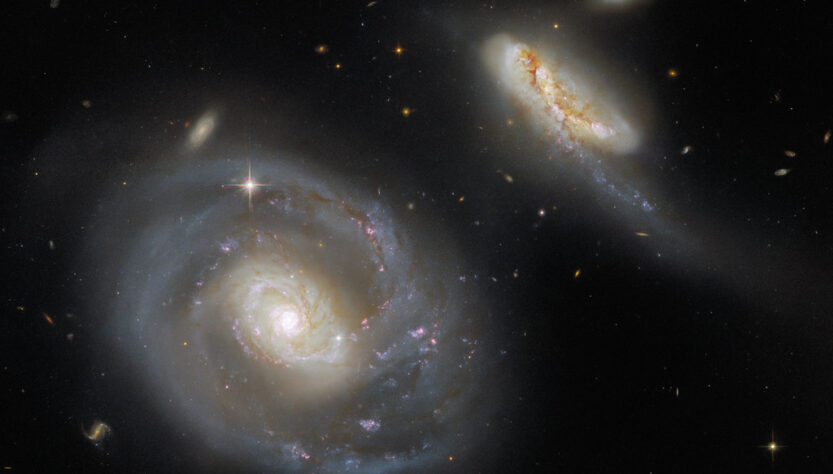
Rogue black holes are reshaping our understanding of the universe. A recent study reveals how these cosmic wanderers carry vital galactic history, offering insights into the formation and evolution of galaxies.
What are rogue black holes?
Rogue black holes are a fascinating phenomenon in the universe, representing remnants of massive stars that have lost their original gravitational ties. Unlike traditional black holes, which are usually found at the center of galaxies, rogue black holes wander through the cosmos, often existing in isolation. This wandering nature is due to various cosmic events, such as the violent mergers of galaxies or stellar explosions that can eject these black holes from their home galaxies.
These black holes can provide valuable insights into the galactic history, as they carry with them clues about the environments in which they formed. Researchers have suggested that studying rogue black holes can help us understand the dynamics of galaxies and the evolution of the universe as a whole. Some of their key characteristics include:
- Mass: Rogue black holes can vary significantly in mass, with some being several times more massive than the sun.
- Isolation: Their solitary nature makes them difficult to detect, as they do not interact with other stellar bodies.
- Influence: They may influence the formation of new stars and the distribution of matter in their vicinity.
As studies continue, our understanding of rogue black holes and their role in the universe will only deepen.
The significance of galactic history
The study of rogue black holes offers profound insights into the galactic history of our universe. These elusive entities, which drift through galaxies rather than residing in fixed locations, serve as cosmic time capsules that can reveal the events of the past.
Researchers have discovered that the movement and distribution of rogue black holes are closely linked to the formation and evolution of galaxies. By analyzing their trajectories, scientists can piece together:
- The processes of galaxy mergers, which often result in the ejection of black holes.
- The impact of gravitational interactions between black holes and stellar populations.
- The role of dark matter in shaping the paths these black holes take.
Each rogue black hole carries with it a unique story, reflecting the tumultuous events that shaped its journey. Understanding these celestial wanderers provides a richer narrative of galactic history, allowing astronomers to construct a more complete picture of how our universe has evolved over billions of years. As studies progress, the significance of rogue black holes in the cosmic tapestry becomes ever more evident.
How rogue black holes form
Rogue black holes, unlike their more stationary counterparts, form through a variety of cosmic events that disrupt their original orbits. One primary method of formation occurs when massive stars exhaust their nuclear fuel and undergo gravitational collapse, resulting in a black hole. If these black holes are ejected from their home galaxies due to gravitational interactions, they become rogue black holes.
Another pathway to becoming a rogue black hole involves the merger of two black holes. When two black holes collide, the resulting entity can gain enough kinetic energy to escape the gravitational pull of its galaxy. Additionally, interactions with dense stellar environments, such as globular clusters, can lead to the ejection of black holes into intergalactic space.
The study of rogue black holes is essential for understanding the complex dynamics of galaxies. Researchers have suggested that these wandering giants may carry with them the remnants of galactic history, revealing information about the stars and regions from which they originated. This connection underscores the importance of rogue black holes in piecing together the intricate narrative of our universe.
Recent study findings
A recent study has unveiled groundbreaking findings about rogue black holes and their integral role in shaping galactic history. Researchers have discovered that these wandering giants, often ejected from their original host galaxies, carry crucial information about the formation and evolution of the cosmos.
According to the study, the movement of rogue black holes is not random but rather influenced by various cosmic events, such as supernovae and galaxy mergers. This behavior allows scientists to trace the paths of these black holes back to their origins, providing a unique glimpse into the past.
The study also highlights several key points:
- Data Collection: Advanced simulations and telescopic observations were used to track the trajectories of rogue black holes.
- Connection to Galactic Evolution: The presence of these black holes helps to explain shifts in galaxy formations over billions of years.
- Future Research: Ongoing studies will focus on identifying more rogue black holes and their impact on the universe.
These findings not only enhance our understanding of rogue black holes but also deepen our appreciation for the intricate tapestry of galactic history.
Implications for astrophysics
The recent discoveries regarding rogue black holes have profound implications for the field of astrophysics. These enigmatic entities, which drift through the universe without a host galaxy, challenge our understanding of cosmic evolution and the formation of celestial structures.
Researchers have found that rogue black holes can serve as a means of tracing the history of galactic mergers and interactions. By studying their movements and distributions, scientists can gain insights into the dynamics of galaxy formation and the gravitational influences that shape our universe.
Moreover, the presence of rogue black holes raises questions about their role in the cosmic ecosystem. They are believed to affect star formation rates and contribute to the regulation of gas in galaxies. This feedback mechanism could alter the trajectory of galactic development over billions of years.
As more studies are conducted, the implications of rogue black holes will likely expand, revealing further complexities in our understanding of the universe. Ultimately, these fascinating celestial objects could redefine our perspective on cosmic history and the fundamental laws governing astrophysics.
Understanding our universe
Understanding our universe involves unraveling the complex interactions between celestial bodies, particularly rogue black holes. These enigmatic entities not only challenge our current knowledge of astrophysics but also provide crucial insights into the formation and evolution of galaxies.
Rogue black holes, which drift through space unattached to any galaxy, serve as cosmic time capsules, preserving the history of their surroundings. Their gravitational influence can reshape the stellar landscapes they encounter, leading to the formation of new stars or the destruction of existing ones.
Recent studies have shown that the presence of rogue black holes can reveal patterns in galactic evolution that were previously hidden. By analyzing the trajectories and interactions of these solitary black holes, astronomers can trace the migration paths of stars and understand the distribution of dark matter across the universe.
This knowledge not only deepens our comprehension of galactic history but also poses new questions about the fate of our own galaxy. As we continue to study these rogue black holes, we may unlock the secrets of our universe and redefine our understanding of cosmic evolution.
The future of black hole research
The future of black hole research is poised for groundbreaking advancements, especially in understanding the enigmatic rogue black holes that traverse galaxies. As technology progresses, astronomers are developing more sophisticated telescopes and observational methods that will enable deeper insights into these mysterious entities.
Upcoming missions, such as the James Webb Space Telescope and other next-generation observatories, are set to enhance our capacity to identify rogue black holes and study their interactions with surrounding matter. These missions aim to uncover the evolutionary pathways of these black holes and their role in shaping galactic structures.
Moreover, advancements in computational astrophysics will allow scientists to simulate the behaviors of rogue black holes under various conditions. This will provide a clearer picture of their formation and movement through space.
In addition, collaborative international efforts among astrophysicists are expected to yield comprehensive databases of rogue black hole sightings, further enriching the field. As researchers continue to unravel the cosmic history written by these wandering giants, our understanding of the universe will evolve, revealing more about the fundamental forces that govern it.
Conclusion on galactic mysteries
In conclusion, the exploration of rogue black holes offers a fascinating glimpse into the intricate tapestry of our galactic history. These enigmatic entities not only challenge our understanding of black hole formation but also shed light on the broader dynamics of galaxies. As researchers continue to delve into the mysteries surrounding these isolated giants, several key insights emerge.
- Galactic Evolution: Rogue black holes serve as markers of past galactic interactions and collisions, providing a timeline of cosmic events.
- Astrophysical Implications: The study of these black holes could lead to breakthroughs in gravitational wave research and dark matter studies.
- Future Research Directions: Continued observations and simulations promise to deepen our understanding of rogue black holes and their role in the universe.
Ultimately, rogue black holes are more than just anomalies in space; they are vital components of the cosmic narrative. As we uncover their secrets, we move closer to answering some of the most profound questions about the origins and evolution of our universe.
By europeanspaceagency via Openverse
References
Related stories
Crew-13 astronauts: Best proven mission to space · Election Commission Online Form Changes: Clear and Simple Guide · Git 2.56 Features: A Clear Solution for Messy Merges