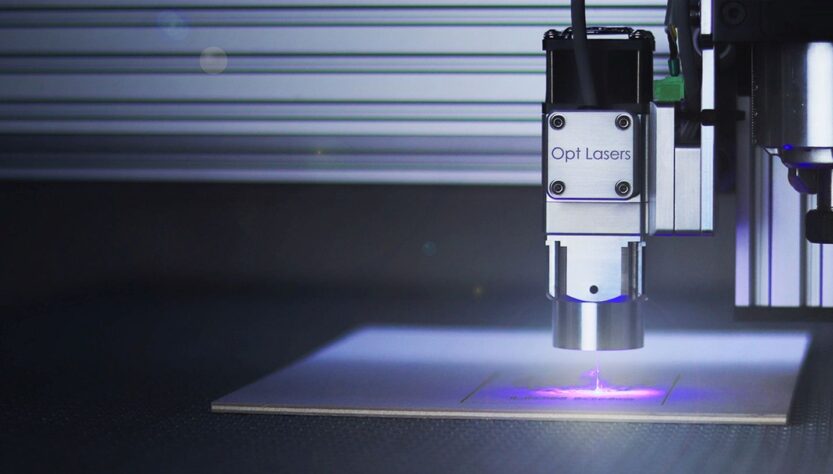
Free-electron lasers are becoming a reality thanks to a dedicated research team. Their innovative approach promises to make this technology more compact and affordable than ever before.
What are Free-Electron Lasers?
Free-electron lasers (FELs) are a revolutionary type of laser that harness the energy of electrons to generate light across a broad spectrum, from microwave to ultraviolet wavelengths. Unlike conventional lasers that rely on atoms or molecules as the lasing medium, FELs utilize a beam of high-speed electrons moving through a magnetic structure, known as an undulator. This unique mechanism allows for the production of tunable and highly coherent light, making FELs versatile tools in various scientific fields.
The operation of free-electron lasers involves several key components:
- Electron Source: A linear accelerator generates a beam of electrons at relativistic speeds.
- Undulator: A series of magnets that create a periodic magnetic field, causing the electrons to oscillate and emit light.
- Optical Cavity: Mirrors that help amplify the emitted light, enhancing its intensity and coherence.
The advantages of free-electron lasers are significant. They can produce high-intensity light pulses with adjustable wavelengths, which is crucial for applications in materials science, biology, and medical imaging. Additionally, recent advancements in technology are paving the way for more compact and cost-effective FEL systems, further expanding their accessibility and potential use in research and industry.
Recent Advancements in Laser Technology
Recent advancements in laser technology have opened new avenues for the development and application of free-electron lasers. These innovative systems utilize a beam of electrons traveling through a magnetic structure to generate coherent light, which can be tuned across a wide range of wavelengths. The latest research highlights several key improvements that may significantly enhance the accessibility and functionality of these powerful tools.
One of the most notable breakthroughs is the miniaturization of free-electron lasers, making them more compact and cost-effective. The research team demonstrated that by optimizing the electron beam dynamics and implementing advanced cooling techniques, they could produce a laser system that is not only smaller but also less expensive to manufacture. This advancement is crucial for various applications, including:
- Medical Imaging: Enhanced imaging techniques can lead to better diagnostic tools.
- Material Science: More precise material analysis and processing methods.
- Defense: Development of advanced detection and targeting systems.
Additionally, the ability to easily tune the wavelength of these lasers allows for greater versatility in research and industrial applications. As researchers continue to refine free-electron lasers, their potential to revolutionize industries grows, paving the way for further innovations and applications in the field of laser technology.
Impact of Compact Lasers on Industries
The emergence of compact free-electron lasers is poised to revolutionize various industries, offering a range of applications that were previously hindered by the size and cost of traditional laser systems. With their ability to produce high-intensity, tunable light, these advanced lasers are becoming essential tools in fields such as:
- Medical Imaging: Compact free-electron lasers can enhance imaging techniques, allowing for more precise diagnostics and treatment planning.
- Material Science: Researchers are leveraging these lasers to explore the properties of materials at the atomic level, leading to innovations in nanotechnology.
- Defense: The military applications of compact lasers include advanced targeting systems and the potential for directed energy weapons.
- Telecommunications: The technology can improve data transmission rates by enabling faster and more efficient optical communication systems.
Moreover, the portability of these lasers means that they can be deployed in various settings, from laboratories to field environments, making them invaluable for research and practical applications alike. As the technology continues to advance, the expectation is that free-electron lasers will become more widely adopted, further driving innovation and efficiency across multiple sectors. This breakthrough not only signifies a technological leap but also represents a significant cost reduction, opening the door for smaller enterprises to harness the power of laser technology.
The Future of Inexpensive Laser Solutions
The future of inexpensive laser solutions is becoming increasingly bright, thanks to the development of free-electron lasers (FELs). These advanced laser systems are not only proving to be compact but also significantly more cost-effective compared to traditional laser technologies. As researchers continue to refine and innovate within this field, the potential applications for FELs are expanding rapidly.
One of the most exciting prospects of free-electron lasers is their ability to deliver high-quality beams across a wide range of wavelengths. This versatility makes them suitable for numerous industries, including:
- Medical: FELs are being explored for applications in surgery and imaging, providing precise and less invasive treatment options.
- Manufacturing: The ability to cut and engrave materials with high efficiency can revolutionize production processes.
- Defense: These lasers may enhance capabilities in surveillance and directed-energy weapons.
- Research: Scientists are utilizing free-electron lasers for advanced studies in materials science and photon interactions.
As these technologies become more affordable, their integration into various sectors is expected to accelerate. With ongoing research and development, free-electron lasers are set to redefine the landscape of laser applications, making them not only more accessible but also paving the way for innovative solutions in the future.
Expert Opinions on Laser Innovations
As the field of laser technology continues to evolve, experts are weighing in on the significance of recent advancements, particularly in the realm of free-electron lasers. Dr. Emily Chen, a leading physicist at the National Laser Institute, stated, “The development of compact free-electron lasers marks a pivotal moment in our ability to harness laser technology for a variety of applications.” She highlighted how these lasers are not only smaller but also more affordable, making them accessible for research institutions and industries alike.
Professor Mark Thompson, an engineer specializing in photonics, emphasized the potential for innovation. “With the recent breakthroughs in compact designs, we can expect to see an explosion of new applications, from medical imaging to materials science,” he noted. He also pointed out that the flexibility of free-electron lasers allows for customization in different fields, enhancing their versatility.
Moreover, Dr. Sarah Patel, a researcher in energy solutions, mentioned, “Inexpensive laser solutions can transform energy systems, making them more efficient and sustainable.” She believes that this technology could significantly reduce costs in various sectors, ultimately benefiting consumers through cheaper and more effective products.
Overall, the consensus among experts is clear: the innovations surrounding free-electron lasers are set to redefine the landscape of laser technology, paving the way for a brighter and more efficient future.
Photo by Opt Lasers from Poland on Pexels